What Is Electronic COC? | Electronic COC
A clear explanation of Electronic COC and how it helps manufacturers control eCoC readiness, IVI XML, signing and certificate delivery.
Electronic COC helps authorized teams prepare, review, sign and manage electronic certificate workflows with clearer ownership. The guide connects daily certificate work with clear operating decisions.
What Is Electronic COC?
Electronic COC is a platform for manufacturers that need to control Electronic Certificate of Conformity work before the final certificate package is released. It connects certificate records, vehicle context, type approval references, IVI XML readiness, signing responsibility, EUCARIS/NAP delivery and archive evidence in one operating workflow.
Why it exists
Many certificate teams still run important work through folders, spreadsheets, email attachments and manual status messages. That may work at very low volume, but it becomes fragile when several users, vehicle categories, approval references and release steps are involved.
What changes
Electronic COC gives the team a shared process. Users can create a record, complete trusted information, review readiness, prepare output, coordinate signing and follow the next action without reconstructing the workflow from separate sources.
Who it helps
It helps manufacturers, compliance teams, homologation coordinators and operations users that need a practical way to prepare, check and track eCoC work with less uncertainty before delivery.
How the certificate workflow is organized
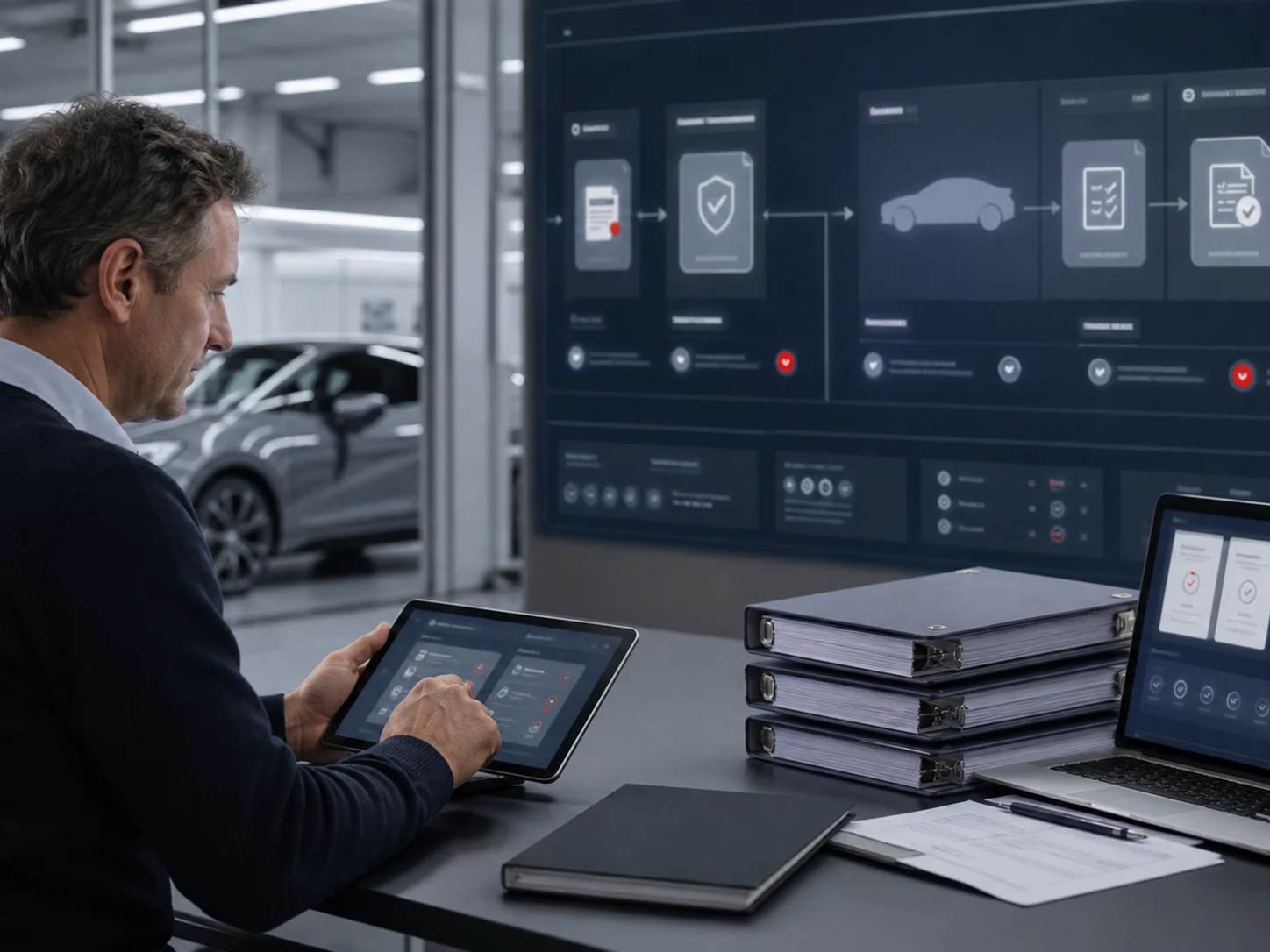
Authorized teams need to understand how certificate records, approval references, vehicle data, review responsibility and final output preparation fit together in daily work. Electronic COC focuses on this operating layer, so the team can see what exists, what is missing, who owns the next action and whether a record is ready to move forward.
The platform is intended for manufacturers and authorized teams managing eCoC workflows. It is not an individual vehicle-owner COC ordering service. This distinction matters because repeatable certificate work needs process control, traceability and rollout planning rather than a one-off document request.
How Electronic COC supports eCoC
A strong digital certificate workflow starts before output generation. The team should know which vehicle information is authoritative, which approval references apply, which users review completeness and which records require follow-up. Electronic COC gives the organization a shared workspace for this preparation work, so eCoC readiness can be reviewed before pressure builds at the final stage.
For technical topics such as eCoC, Electronic Certificate of Conformity, Vehicle COC, IVI, EUCARIS and XML, the daily problem is often coordination. Raw data, XML preparation, EUCARIS or NAP delivery, signing responsibility and type approval context can involve different people. A visible workflow helps those people work from the same record instead of reconstructing status from emails, folders or spreadsheets.
Where Electronic COC fits
Electronic COC helps manufacturer, compliance team and type approval teams prepare certificate records, check missing information, keep approval context attached and follow the status of each record. The platform is useful when a manufacturer wants to start with a controlled scope, prove the workflow with real records and then expand after users understand the process.
The goal is not to add another isolated tool. The goal is to make certificate work easier to see, assign, review and finish. That includes commercial planning through a scope-based quote, implementation planning around real vehicle groups and practical user adoption for compliance, operations and management teams.
Implementation checklist
- Define the first manufacturer team, vehicle group or certificate workflow in scope.
- List the approval and vehicle data that must be attached to each record.
- Clarify who owns data completion, readiness review and output preparation.
- Identify IVI, XML, EUCARIS, signing, VECTO, ERP or API requirements early.
- Decide how exceptions, missing information and repeated checks will be handled.
- Keep the first rollout narrow enough for users to adopt, then expand with evidence.
How to decide the next step
The practical question is whether your current process can support repeated certificate work with clear data ownership, traceable review and predictable rollout. Electronic COC is built for that manufacturer-side question. It helps teams turn regulatory and technical context into a process people can operate every day.
The strongest results usually come from combining process clarity with technical readiness. That means the team understands what data is required, which records are blocked, who should review the next action and how the first implementation scope will become a larger operating model.
What to evaluate before choosing software
Manufacturers should evaluate whether the platform supports real daily work: record status, ownership, missing-data review, approval references, user roles and a clear path from pilot scope to wider rollout. A good eCoC workflow should help both technical and non-technical users understand the same process.
Electronic COC is designed around that practical operating model. If your team is comparing options, focus on how quickly users can understand the workflow, how clearly readiness is visible and how well the platform supports your actual certificate volume and rollout constraints.
Canonical page